
Search Kusilvak Census Area Traffic Court Records
Kusilvak Census Area Traffic Court Records are handled through Bethel or Nome rather than a local courthouse, so the search always begins by identifying which court has the file. That matters because a citation might be filed in either place depending on where the case started and how it was routed. If you are trying to find a ticket, confirm a hearing, or request a copy, CourtView and the court directory are the best starting points. The right office tells you more than a rumor or a paper notice, and the court record is the fastest way to see where the case actually sits.
Kusilvak Traffic Court Records in Bethel and Nome
For Kusilvak residents, the two main court contacts are the Bethel Trial Courts, 204 Chief Eddie Hoffman Highway, Bethel, AK 99559, phone (907) 543-2298, and the Nome Superior & District Court, 306 W 5th Ave, Nome, AK 99762, phone (907) 443-5216. Those offices are the court homes for cases that do not have a local courthouse in the census area. If a citation shows up in either district, the file belongs to that court, not to a local government office in Kusilvak itself. Knowing which court has the file is the first real step in any search.
The Bethel directory at courts.alaska.gov/courtdir/4be.htm and the Nome directory at courts.alaska.gov/courtdir/2no.htm are the official contacts to keep open while you search. They show the court addresses and phone numbers that match the real file location. Kusilvak cases filed in Bethel will follow the Bethel contact path, while Kusilvak cases filed in Nome will follow the Nome path. That split is important because it keeps you from asking the wrong office to find the wrong case.
Because the region is remote, telephonic appearance options are emphasized in the research. That practical detail matters for traffic records because the hearing method and the docket often move together. If you are looking at a citation that already has a court date, the record should show enough information to tell you whether a remote appearance was used or should be used. The court record, not the paper citation, is what confirms that next step.
The Alaska Court System directory image comes from courts.alaska.gov/courtdir/index.htm and represents the court resource that serves Kusilvak Census Area Traffic Court Records.
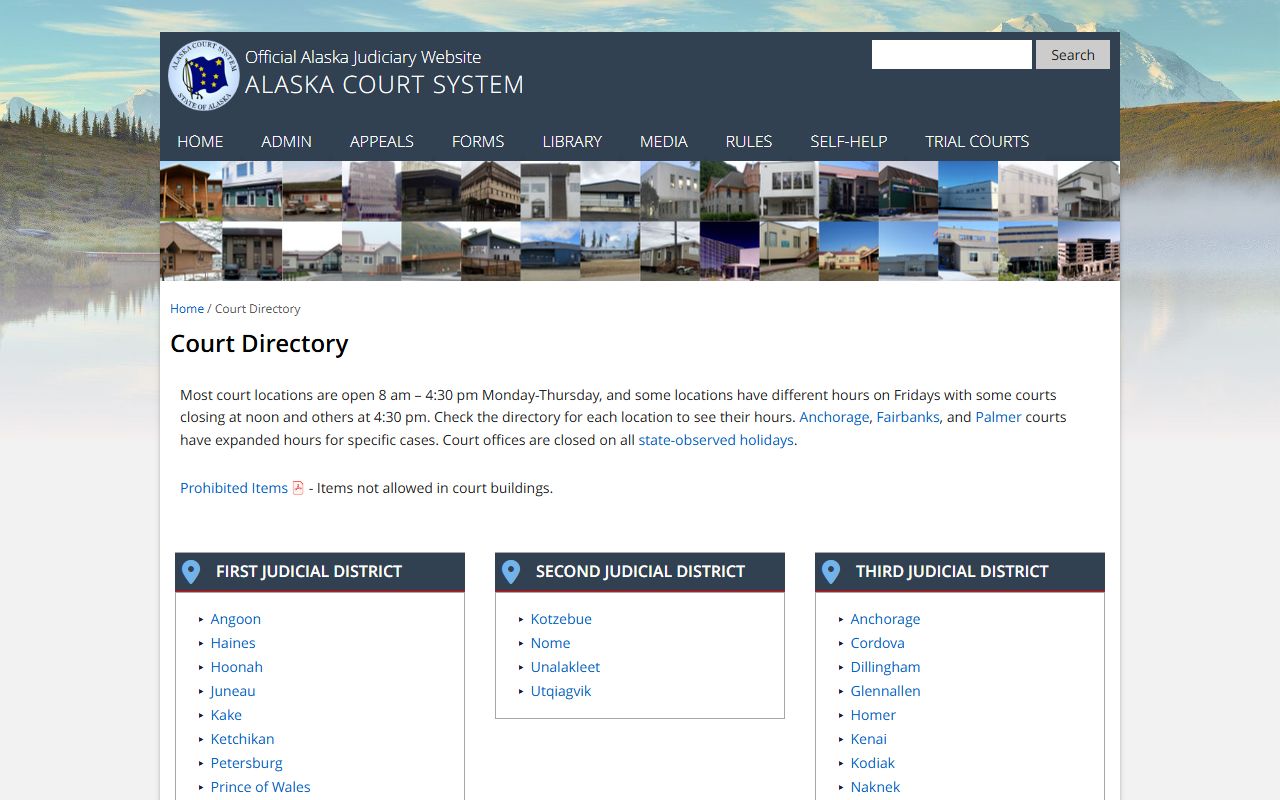
This is a state court resource image, not a local Kusilvak courthouse photo, and it is useful because Kusilvak traffic cases are served through nearby Alaska courts rather than a local building.
How to Search Kusilvak Traffic Court Records
The search path for Kusilvak Traffic Court Records begins with CourtView at records.courts.alaska.gov. The system covers filed cases and gives you a quick way to check whether a traffic matter is in the court system yet. That is especially helpful in Kusilvak, where the local geography makes it worth confirming the docket before you start making calls or planning travel. If the case has a number, use it. If it does not, search by name or citation and then compare the result against the court directory.
The traffic self-help page at courts.alaska.gov/shc/mo/index.htm explains the normal response paths for Alaska traffic and minor offense cases. That guidance helps you decide whether you are looking at a payment question, a hearing question, or a record request. For Kusilvak residents, the practical value is simple. The page tells you how the case should move, while CourtView tells you where it is now. When both line up, the traffic file becomes easier to understand and easier to use.
Because cases may be filed in Bethel or Nome, it helps to read the 4BE and 2NO prefixes carefully if they appear in the file. Those prefixes point you to the right court before you contact the clerk. They also help you avoid mixing one village's case with another's. A small detail like that can save hours. It can also prevent you from asking the wrong office for a document that is sitting in a different court's system.
Requests and Copies for Kusilvak Traffic Court Records
When you need copies of Kusilvak Traffic Court Records, the forms page at courts.alaska.gov/forms/index.htm is the right place to look for the standard TF-311 records request form. That form is the normal way to ask for a docket sheet or a file copy from either the Bethel or Nome office. It works best when you already know which court has the file, because then the request can go straight to the correct clerk. A narrow request is better than a broad one when the case may be in more than one Alaska district.
TrueFiling is required for agencies and attorneys in the case types listed by the research, so electronic filing rules can matter even when you are only trying to resolve a traffic record issue. That is one reason the trial courts page at courts.alaska.gov/trialcourts/ is useful. It gives you a broader court-system frame for how records, filing, and court channels fit together. If you are filing as a public agency or as counsel, the process should match the court and the case type before you send anything in.
If you need the statute behind the citation or the rule behind the procedure, the Alaska Legislature database at akleg.gov/basis/statutes.asp is the official source. But the file itself still matters most. The statute may explain why the ticket exists, yet the court record shows whether a response was filed, whether a hearing happened, and whether the matter was closed. That is the difference between knowing the rule and knowing the case history.
Remote Appearances and Kusilvak Traffic Court Records
Kusilvak is one of the places in Alaska where distance shapes almost everything about court access. The research emphasizes telephonic appearance options because a trip to court is not always practical, and the record often has to work for someone who is not standing at the clerk's window. That means you should treat the hearing method as part of the record trail. If the case file shows a date, a remote appearance note, or a telephonic schedule, those details are part of how the court expects the matter to move.
When a case is filed in Bethel, the Bethel Trial Courts are the place to call. When it is filed in Nome, the Nome Superior & District Court is the place to call. That split matters because the two offices have different contact details and different schedules. The Bethel office is on Chief Eddie Hoffman Highway, while the Nome office is on W 5th Ave. If you are trying to locate the record, the address tells you which court has the file before the clerk ever picks up the phone.
The most reliable way to keep Kusilvak Traffic Court Records straight is to pair the directory with CourtView and then use the forms page only after you know where the case belongs. That workflow keeps the search local to the court that actually holds the file, not to the community where the citation was issued. For a remote area, that is the difference between a useful records search and a slow one. The file itself remains the final answer.
Using Kusilvak Traffic Court Records After Search
Once you have found Kusilvak Traffic Court Records, the file becomes a practical tool. It shows whether the citation was entered, whether the court scheduled a hearing, whether a response was filed, and whether the matter was closed or still open. That is the information most people actually need. A ticket only says what was alleged on the road. The court record shows what the court received and what the court did next. Those are not the same thing, and the difference matters whenever you need proof of status or a clean history.
If the search turns up a Bethel file, keep the Bethel contact details with it. If it turns up a Nome file, keep the Nome contact details with it. That sounds simple, but it prevents a lot of wasted time later. The clerk can work faster when the request matches the right office. The same is true if you need a copy after the search. You will get farther by asking for the exact docket or file copy than by asking the court to sort out a vague description of the citation.
Kusilvak Traffic Court Records are most useful when you treat them as a route map. First you identify the court. Then you search CourtView. Then you use the directory and forms if you need a request or a follow-up. That order keeps the process grounded in the official court record and avoids guessing about which court has the case. In a remote area, that discipline saves time and helps the record do the work it was meant to do.