
Search Kalifornsky Traffic Court Records
Kalifornsky Traffic Court Records are handled through the Kenai District Court because Kalifornsky is a census designated place in Kenai Peninsula Borough, not an incorporated city. That puts the search on a clear path. Start with the Kenai court directory, CourtView, and the standard TF-311 request route if you need the file itself. The location sits near Soldotna and Kenai, so the right court is close to the central peninsula traffic flow. Once you know the Kenai office holds the record, it is much easier to check a citation, find a docket line, or request a copy without chasing the wrong desk.
Kalifornsky Traffic Court Records and Kenai
The Kenai District Court at 125 Trading Bay Drive, Suite 100, Kenai, AK 99611 is the main filing point for Kalifornsky Traffic Court Records. The court directory at courts.alaska.gov/courtdir/3kn.htm confirms the contact path, and the office can be reached at (907) 283-3110. Records go to 3KNmailbox@akcourts.gov, and fax requests go to (907) 283-8535. That is the practical starting point for anyone in Kalifornsky who needs the actual court file rather than just a portal summary.
The clerk's office has two regular closure windows, Thursday from 8:00 AM to 9:00 AM and Friday from 12:00 PM to 1:00 PM. Those short gaps matter when you plan a walk-in request or call ahead for a file check. The Kenai court serves the central peninsula traffic path, which means a citation from Kalifornsky often lands in the same office that handles nearby Soldotna and Kenai matters. A local search works best when you keep that regional pattern in mind and match the citation to the filing court instead of to a street name alone.
The case code matters too. CourtView uses the 3KN prefix for Kenai matters, and that prefix helps narrow the result to the right court file. If you already have the citation number or the case number, you are in a much better spot. If you do not, the clerk can still help, but the search may move more slowly because the office has to identify the right record before it can release a copy. That is why Kalifornsky searches work best when the Kenai court code, the date, and the full name stay together from the start.
The contact details matter because they help you choose the best route before you make the trip. A call can confirm whether the file is public, whether it is already in CourtView, and whether the office needs the case number before it will pull a paper copy. That saves time for a Kalifornsky search. It also keeps you from treating a courthouse visit like a simple front desk stop when the record actually needs a file lookup first. The Kenai court is set up for that kind of request, so the more exact your details, the faster the result.
The approved Kenai court directory image comes from the Kenai court directory.
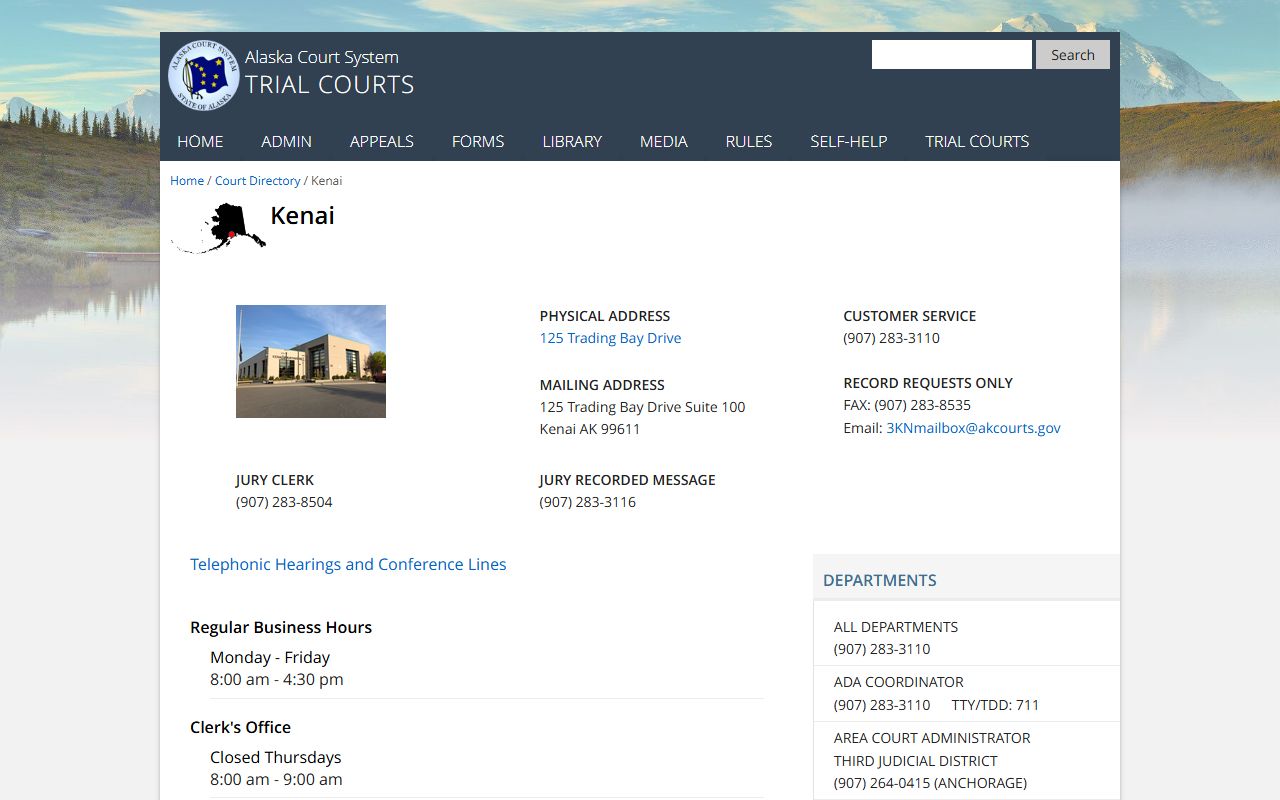
That directory image is the cleanest quick reference for the court location, contact details, and request route tied to Kalifornsky Traffic Court Records.
How to Search Kalifornsky Traffic Court Records
The public search starts with CourtView at records.courts.alaska.gov. Kalifornsky Traffic Court Records can be searched by name, citation number, case number, or hearing date, and the 3KN code helps you tell a Kenai file from other Alaska traffic cases. If your search starts broad, add the citation date or the year to tighten it. That keeps the result set small and helps you see whether the record is active, resolved, or still waiting on a later court step.
The traffic and minor offense help page at courts.alaska.gov/shc/mo/index.htm is the best official guide when you want to understand what a citation means before you request the file. It explains the traffic process in plain language and gives the search a local court context. If you want the rules behind a charge or the legal wording on a citation, the Alaska Legislature statutes database at akleg.gov/basis/statutes.asp gives you the source text. That is useful when you need to compare what the ticket says with what the court record shows.
Kalifornsky searches usually work best when you think like the court does. The court thinks in case code, filing date, and docket order. A street name helps place the stop, but it does not pull the file by itself. If you already know the Kenai prefix and the name on the ticket, the search becomes much cleaner. If the record is thin in CourtView, the clerk path still works because the file belongs to the Kenai court and not to a neighborhood office in Kalifornsky.
It also helps to search more than one way. A name search can confirm whether the court has the file, while a citation search can show whether the ticket was entered under the exact number printed on the citation. If the result does not show much detail, do not assume the case is missing. Some traffic files start with a slim portal entry and then fill in later when the court receives the paper or when the hearing date is set. That is normal enough to matter in Kalifornsky, where the same filing court handles a wide mix of peninsula traffic work.
The federal reference image from doi.gov gives a second official point of context for Kalifornsky Traffic Court Records.
It helps show that Kalifornsky is a place name tied to a broader Kenai Peninsula record path, not a separate courthouse with its own traffic file room.
Request Kalifornsky Traffic Court Records
If you need a copy, the statewide trial courts page at courts.alaska.gov/trialcourts/ is the official place to start. For Kalifornsky Traffic Court Records, use the standard TF-311 form from courts.alaska.gov/forms/index.htm. The request belongs to the Kenai court, so the form should be sent where the case was filed. That keeps the workflow local and avoids the slower back-and-forth that happens when a request lands at the wrong office.
The form asks for the requestor's name, contact details, case name, case number, and the specific documents needed. Those fields matter because the clerk has to match the right traffic file before anything can be released. If the case number is missing, the court has to search first, and that can slow the request down. The right order is simple. Find the case in CourtView, confirm the Kenai filing court, and then send the records request with the exact details that identify the file you want.
For a copy request, the question is often not just whether a file exists. The question is whether you want a plain copy, a certified copy, or a record tied to a hearing or other court event. The Alaska Court System's payment page at courts.alaska.gov/trialcourts/payments.htm and fee page at courts.alaska.gov/shc/courtfees.htm help you check the current payment path before you send money or ask for a certified record. That is especially useful if you are matching a citation to a docket and want the paper copy to line up with the online case view.
The trial courts page also helps when you need to decide how to send the form. If the record is already public, a short request may be enough. If the file is confidential or partly sealed, the court may need ID before it releases the material. That is why Kalifornsky requests work best when the form is filled out all the way and the case information is exact. The court can move faster when it does not have to guess at the right docket or search the wrong name.
Kenai Peninsula Traffic Path
Kalifornsky sits in Kenai Peninsula Borough, and that borough setting shapes the search path. The community is near Kenai and Soldotna, so the court that handles the record is part of the same central peninsula corridor that serves a lot of day-to-day traffic activity. That is why Kalifornsky Traffic Court Records are not handled through a separate city hall file stack. They move through the Kenai court, which is the office that keeps the traffic docket, hearing history, and copy request path.
The local part still matters because it tells you where the stop happened and which community context to use when you verify the citation. The court part matters because it tells you where the file lives. When those two pieces stay separate, the search becomes faster and the request is easier to finish. A borough location can point you toward the right court, but the court directory and CourtView are the tools that actually get you the record.
If your citation came from a road near Kenai or Soldotna, the Kenai District Court is still the right place to look first. That is true whether you need the docket, the hearing date, the payment status, or a clean paper copy. Kalifornsky Traffic Court Records are best handled as a court file search, and the Kenai filing court is the straightest path to that file.
The central peninsula framing matters for another reason. It keeps the request tied to the same file room even when the stop happened near a different town line or a rural road that local drivers know by feel. The court does not care how the road name sounds. It cares about the case code and the filing history. That is why the Kenai path stays the best one for Kalifornsky, and why the same office can resolve a search that starts in a CDP and ends in a court file.
What Kalifornsky Traffic Court Records Show
Kalifornsky Traffic Court Records can show the citation number, the court case number, the hearing date, the docket line, payment activity, and the final result of the matter. That is enough to answer a lot of practical questions. You can see whether a citation was filed, whether a hearing was set, and whether the court already entered a final outcome. For a lot of people, that is the main reason to search in the first place.
The record also helps separate the court case from any roadside contact, police report, or borough record that may have started the process. Those records can be related, but they do not sit in the same office. If you need the court version, use CourtView, the Kenai directory, and the TF-311 path. If you need local context, the CDP name tells you where the stop happened. That split keeps the search sharp and keeps you from asking the wrong office to solve the wrong problem.
When the file is already in CourtView, the search is quick. When it is not, the Kenai request path still gives you a clean way forward. Either way, the goal is the same. Get from the Kalifornsky place name to the actual traffic court record without wandering through unrelated files or offices.
That is also why it helps to keep a copy of the citation, the mailing address on the ticket, and any hearing notice together. Those pieces let the court match the right file faster and help you spot whether the record was updated after the original stop. A clean set of details makes the search practical. It also makes the request more useful if you need to compare the paper copy with what CourtView shows online.