
Find Juneau Traffic Court Records
Juneau Traffic Court Records are the starting point for finding a state traffic case, a minor offense citation, or a payment issue tied to a Juneau ticket. If you are trying to see whether a citation reached the court, confirm a hearing date, or request a copy of a case file, Juneau gives you both online and in-person paths. This page explains the difference between court-held traffic records and city-side municipal records, shows where the clerk works, and points you to the search tools that are most useful for current cases and older files.
Juneau Clerk Snapshot
Juneau Traffic Court Records and City Records Are Not the Same
The first thing to sort out in Juneau is whether you need a court file or a city administrative record. Court traffic cases go through the Alaska court system and are searched in CourtView. City-side records, by contrast, are handled by the City and Borough of Juneau Municipal Clerk and by the city’s public records process. That difference matters because a traffic citation, a municipal ticket note, or a records request about city government can each follow a different path even if all three involve the same person or vehicle.
The municipal clerk pages on juneau.org/clerk/clerk-contact and juneau.org/clerk/municipal-records are the right place to start when you are looking for city records, public record routing, or the office contact list. For the court side, the Juneau Trial Courts remain the source for the actual traffic case file, hearing schedule, docket entries, and payment history. When a ticket has a court case number beginning with 1JU, the court file is usually the better source than the municipal clerk.
Juneau’s municipal contact information is useful when a citation is tied to the city rather than to the court’s normal payment flow. The clerk’s office is listed at 155 Heritage Way, Juneau, AK 99801, with phone (907) 586-5278 and email Breckan.Hendricks@juneau.gov. The municipal records page also routes requests through City.Clerk@Juneau.gov. If you are unsure which office has the record, start by deciding whether you are looking for the court file or a city record about the citation.
| Municipal Clerk | City and Borough of Juneau Municipal Clerk |
|---|---|
| Address | 155 Heritage Way, Juneau, AK 99801 |
| Phone | (907) 586-5278 |
| Breckan.Hendricks@juneau.gov |
The clerk contact page on juneau.org is the easiest place to verify the municipal office before you send a records question.
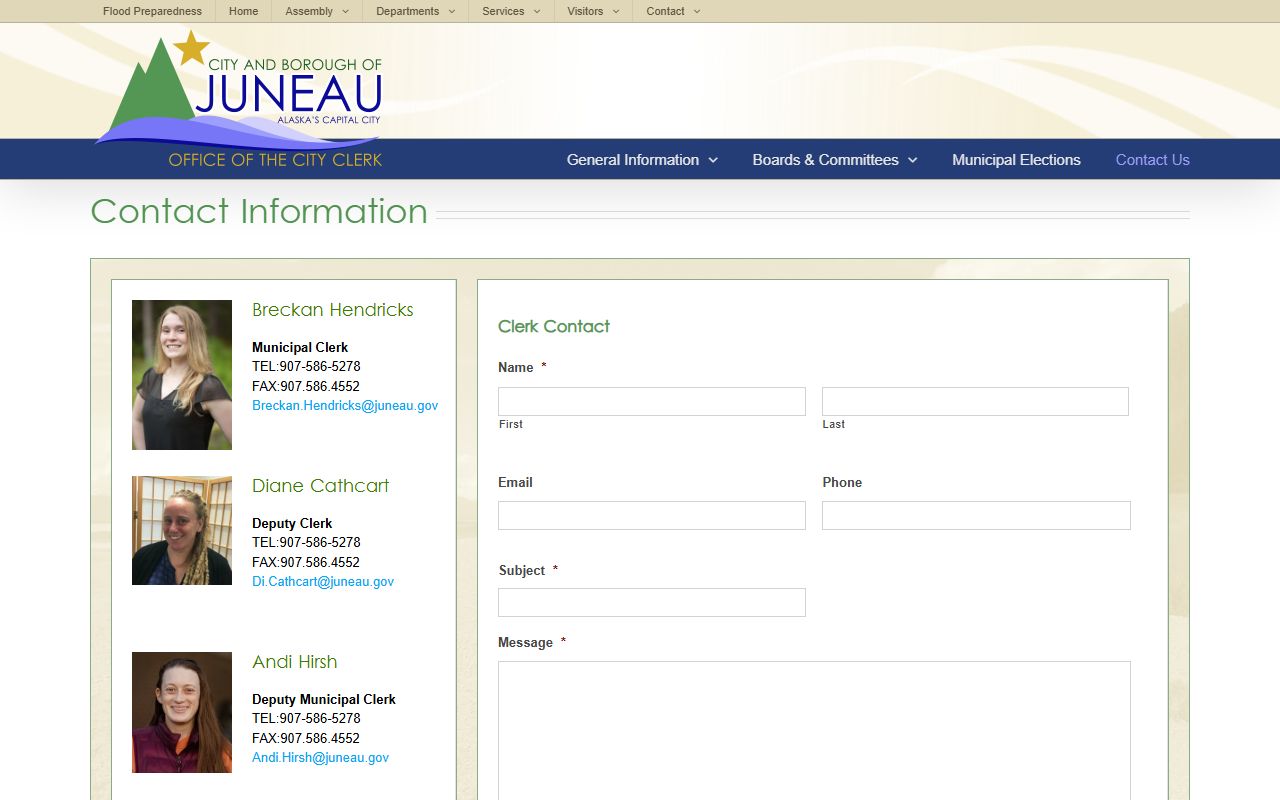
This image is helpful when you need to separate a city records request from a court records request and want the correct Juneau office at a glance.
Searching Juneau Traffic Court Records in CourtView
For an active or recently closed case, CourtView is the fastest path. You can search by case number, party name, or citation number, and the system shows the public docket that the clerk has entered for the case. Juneau cases use the 1JU prefix, so a traffic file may appear as 1JU-24-01234MO or a similar format. The dashes and leading zeroes matter, so it is worth copying the case number exactly as it appears on a ticket, receipt, or clerk printout.
Search results are helpful, but they are not the whole record. CourtView usually shows the public case summary, charge information, hearing history, and financial activity, yet some matters remain hidden because they are confidential or not part of the open public view. Alaska traffic law and court rules also affect what can be displayed online, and the current statute index is at akleg.gov. If you are checking a ticket that has not yet shown up, the clerk may still be processing it, or the citation may belong to a city payment path instead of a court file.
To get the cleanest result, gather a few details before you search:
- The full party name from the citation or notice
- The ticket number or case number if it is visible
- The approximate date of the stop or filing
- The violation type if the ticket mentions a state or municipal code
- Any middle initial or alternate spelling that might appear in the record
The court system warns users not to assume a search result is the correct person without confirming the date of birth or another identifying detail. That caution matters in Juneau because there can be multiple cases with similar names, and some minor offense entries take time to move from ticket to open case. If you are following a live traffic matter, the search screen is useful, but the clerk can still confirm the docket status when a hearing or payment question needs a human answer.
Juneau Traffic Court Records, Arraignments, and Payments
If your Juneau traffic citation requires a court appearance, the arraignment schedule is one of the first things to check. Weekend and holiday arraignments are held at 10:30 AM, and public access is by telephone at 1-888-788-0099 using meeting ID 923 853 3061. That is especially useful when a citation was issued shortly before a weekend or holiday and you need to confirm that the court still expects you to appear. The court’s regular business hours are Monday through Friday, 8:00 AM to 4:30 PM, with the clerk closed Thursdays from 8:00 AM to 9:00 AM.
Payments also split depending on who issued the ticket. The Alaska Court System’s payment guidance at courts.alaska.gov/trialcourts/payments.htm explains the normal court payment process, and Juneau courts can accept credit card payments. Some Juneau Police Department tickets may be payable directly to the city rather than through the state court system, so the ticket itself is the best guide. If you are unsure, check whether the citation points you to the court, the city, or an online payment screen before you send money.
When a payment problem shows up in the record, the docket often gives the fastest explanation. You may see a due date, a partial payment, a missed hearing, or a case note that explains why a fine remains open. The point of searching Juneau Traffic Court Records is not just to see whether a ticket exists, but to understand how the case moved and whether the court still has an active requirement on the file. That is why the payment tab, the hearing tab, and the docket entries all matter together.
The municipal records page on juneau.org/clerk/municipal-records is the right route when the question is a city record request instead of a state court file.
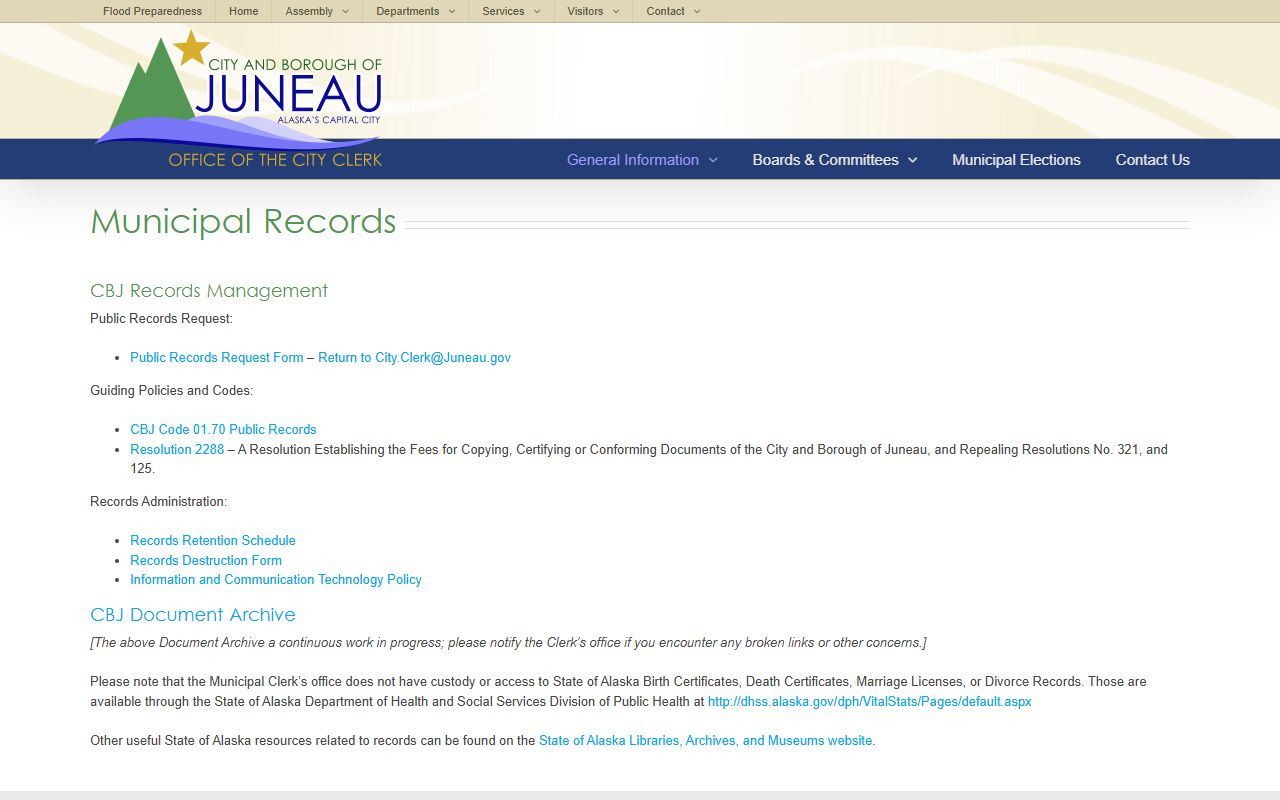
This image pairs with the municipal records page and helps show that the clerk’s office handles separate city records requests even when the subject overlaps with a traffic stop.
Requesting Copies and Historical Juneau Traffic Court Records
To request copies of a court file, use the standard Alaska TF-311 records request form. That form is the court’s general records-request tool and works well when you need a judgment, docket sheet, charging document, or a certified copy for proof that a traffic case was resolved. Juneau accepts requests in person, by mail, by fax, and by email, so you can choose the method that matches how quickly you need the file and whether you already have a complete case number.
Historical searches can take you beyond the online portal. The Alaska State Archives in Juneau keeps older material that may not be fully represented in CourtView, especially when the case predates the modern electronic system. That is where you go if the citation is old, the case number is incomplete, or the records you want are more likely to exist in a paper index than in a current web search. For a Juneau case, the court prefix and approximate year usually give the archives a much better starting point than a vague request for “an old ticket.”
It also helps to remember that Alaska’s public-record limits and traffic-case rules shape what can be released. Some files are open, some are partial, and some records are outside the standard public portal. If you need to confirm the final result of a case, the clerk and the docket are often enough. If you need to reconstruct an older ticket or a city-related issue, the archives and the municipal records page may be the better route. That is the practical difference in Juneau: court records prove what happened in the case, while city records can explain how the ticket or request was handled on the municipal side.