
Search Big Lake Traffic Court Records
Big Lake Traffic Court Records do not sit in a separate Big Lake courthouse because Big Lake is a census designated place in Matanuska-Susitna Borough, not an incorporated city. Traffic matters from the area are served through the Palmer District Court at 435 South Denali Street, Palmer, AK 99645. If you need to check a citation, find a docket entry, or ask for a copy, start with the Palmer court directory, CourtView, and the TF-311 PA request route. That keeps the search tied to the court that actually holds the file.
Big Lake Traffic Court Records and Palmer Access
The Palmer Superior & District Court is the main court for Big Lake traffic matters, and that matters because Big Lake does not have its own local court file room. The court keeps the written record, the docket history, and the copy request path for the area. Customer service is (907) 746-8181, records requests go to 3PACopyRequests@akcourts.gov, and the fax number is (907) 746-8152. The Palmer directory at courts.alaska.gov/courtdir/3pa.htm gives you the most direct official contact path.
Big Lake is a CDP, so the search logic is a little different from a city page. You are not looking for a separate city courthouse or a city clerk who keeps a traffic docket. You are looking for the borough community path that points back to Palmer. The borough site at www.matsugov.us is a useful local context source, but the case itself still belongs in the state court system. That is why a Big Lake search starts with the court, not with a local page or a travel-style listing.
Big Lake cases use the 3PA prefix in CourtView, which makes them easy to spot once you know the code. That prefix is a small detail, but it matters. It keeps the result list from spreading into other places and makes the search more exact. If you already have the case number, use it. If you only have a citation number or a name, add the year or the date of the stop so the court can match the right traffic file without guesswork.
The Mat-Su Borough image below comes from the Matanuska-Susitna Borough site and gives the best official local context for Big Lake Traffic Court Records.
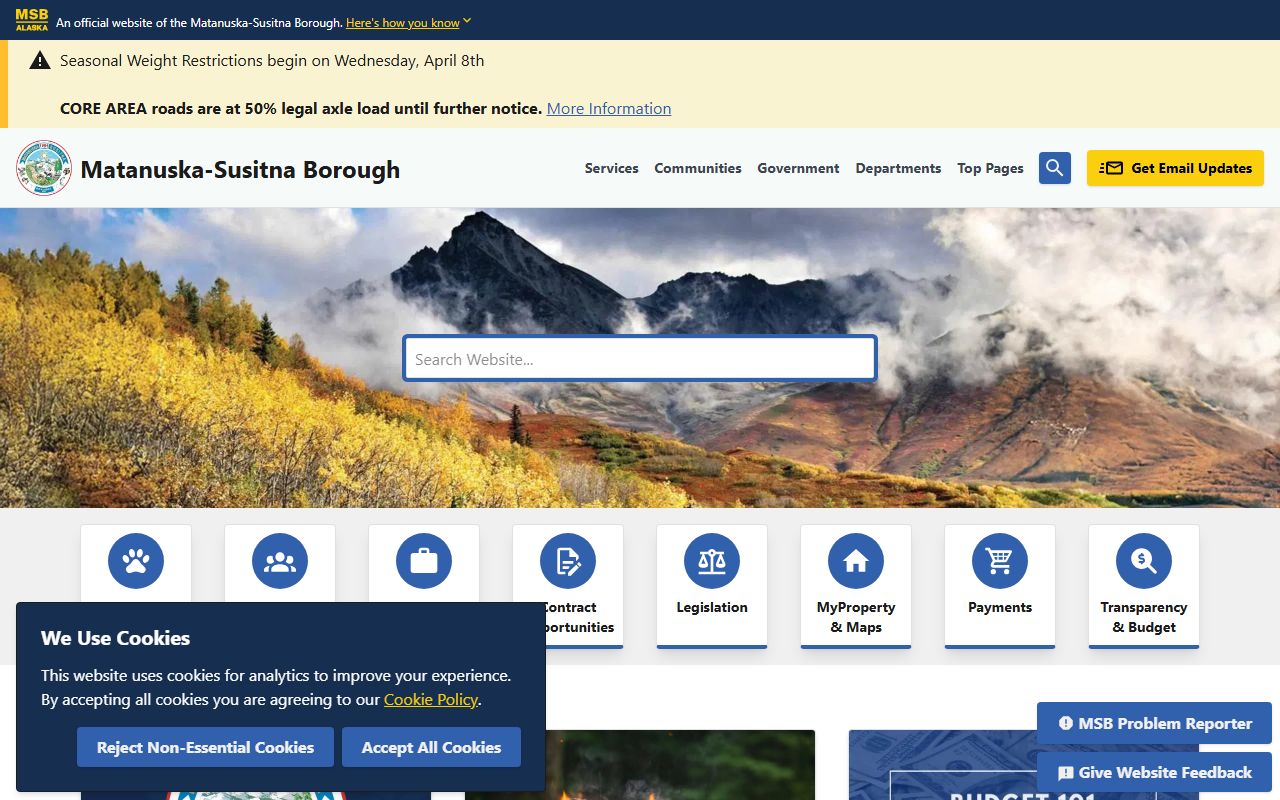
Use it as a borough reference point, since Big Lake traffic cases still route through Palmer rather than a separate local courthouse.
How to Search Big Lake Traffic Court Records
The first public check is CourtView at records.courts.alaska.gov. Big Lake Traffic Court Records can be searched by name, citation number, case number, or hearing date, and the Palmer 3PA prefix helps you verify that the result belongs to the right court. That is especially useful for a CDP like Big Lake, where the traffic case is filed in the regional court instead of a local city court. A clean search makes the next step much easier.
The Alaska Court System traffic and minor offense page at courts.alaska.gov/shc/mo/index.htm is helpful when you want to understand the response path after a citation is issued. It shows how the traffic process works and helps you decide whether you are looking for a record copy, a hearing date, or a case status update. If the citation cites a rule or offense code, the Alaska statutes database at akleg.gov/basis/statutes.asp can give you the official text so you can compare the citation with the statute itself.
If the result is thin or the name search returns more than one case, narrow the search with the date, the citation number, or the 3PA case prefix. The goal is not to pull a huge list. The goal is to confirm whether the file is active, filed, or already resolved. Once you know that, you can decide whether a copy request or a simple status check is the better next move.
Request Copies for Big Lake Court Files
When you need a copy, use TF-311 PA for Palmer. The statewide forms page at courts.alaska.gov/forms/index.htm points to the right request workflow, and the Palmer PDF at public.courts.alaska.gov/web/forms/docs/tf-311pal.pdf gives you the location-specific form. That is the form to use because Big Lake records are filed through Palmer rather than through a separate local court. If you want a written docket, a judgment, or a certified copy, this is the record path to follow.
Online and email requests usually take two to four weeks. In-person requests with a case number are often handled right away. That difference matters if you need the paper in hand fast. The court can move faster when you give it the case number, the citation number, or both. Without that detail, the request becomes a search job first and a copy job second, which slows the whole process. Keeping the data tight is the best way to keep the answer quick.
The Palmer forms page also covers the TF-304 PA audio request path when you need a hearing recording instead of a paper copy. A recording and a docket copy answer different questions, so choose the right request before you send it. If all you need is proof that the matter was resolved, the written file may be enough. If you need to hear the hearing itself, the audio request is the better fit. The forms page keeps both options in one official place.
Big Lake Records and Borough Context
Big Lake is part of Matanuska-Susitna Borough, so local context comes from the borough rather than from an incorporated city government. That is an important detail when you are trying to sort out where a traffic case should go. The borough site can help you understand the community setting, but it does not replace the Palmer court file. If your question is about the traffic docket, hearing history, or a copy of the case, the court is still the office to use.
The court and the borough serve different jobs. The borough is useful when you need community information. The court is where the traffic record lives. Big Lake users often save time by starting with that split in mind. It stops the search from bouncing between the wrong office and the wrong site. Once you know the file sits in Palmer, the rest of the process becomes a lot more direct.
What Big Lake Traffic Court Records Show
Big Lake Traffic Court Records can show the citation number, the 3PA case number, hearing dates, docket entries, payment activity, and the final disposition. That is useful when you want to confirm what happened after the stop, not just whether a ticket once existed. CourtView can give you the public-facing status, but the court file is the source you want when you need the actual paper trail. A clean case record can settle a timeline question fast.
These records can also help you separate the court case from any local police or borough contact that may have started the process. The stop, the citation, and the filing can all touch the same event, but they do not live in the same office. If you need the filed traffic matter, Palmer is the right court. If you only need a community context or borough information, the Mat-Su site is the better local reference. That split keeps the search useful and keeps you from sending the same question to the wrong desk twice.
When you combine CourtView, the Palmer directory, and the TF-311 PA request form, you get the full path from search to copy. That is the best Big Lake workflow because it respects where the file actually lives. It also keeps the request simple. Search first, confirm the case, and then ask for the exact copy or recording you need.