
Search Badger Traffic Court Records
Badger is a census designated place in Fairbanks North Star Borough, and Badger Traffic Court Records are searched through the Fairbanks District Court instead of a local city desk. That matters because Badger sits near Fairbanks and North Pole, so the place name on a ticket can point you toward the right court, but not toward a separate courthouse. If you need to confirm a citation, check a hearing result, or ask for a copy, start with the Fairbanks court directory and CourtView. That path gets you to the actual record faster than guessing which office might have it.
Where Badger Traffic Court Records Are Kept
The Fairbanks Superior Court and Fairbanks District Court both sit at 101 Lacey Street, Fairbanks, AK 99701, and that shared courthouse is the record source for Badger traffic matters. Customer service is (907) 452-9277, the minor offense and traffic line is (907) 452-9238, and the records email is 4FArecords@akcourts.gov. Those details matter because Badger does not have its own traffic court office. The court file, the docket, and the request path all run through Fairbanks.
The Fairbanks court directory at courts.alaska.gov/courtdir/4fa.htm is the first place to check when you want the direct office listing. The public records portal at records.courts.alaska.gov gives you the CourtView search path, and the statewide trial courts page at courts.alaska.gov/trialcourts/ shows how the district court fits into the Alaska court system. That combination is better than a broad web search because it puts the citation back in the court that actually keeps the file.
Badger cases generally use the 4FA prefix, so that prefix is a useful filter when you are trying to separate one traffic file from another. It also helps when the ticket came from a road near Fairbanks or North Pole and the record has to be matched to the right docket line. If the office knows the prefix, the case number, or the citation number, it can move much faster. The borough site at www.fairbanksnorthstarborough.gov is helpful for community context, but the record itself stays with the court.
Note: The courthouse is the record source, not the borough page, so the search should start with Fairbanks even when the stop happened in Badger.
The approved Fairbanks court directory image below comes from the official Fairbanks court directory.
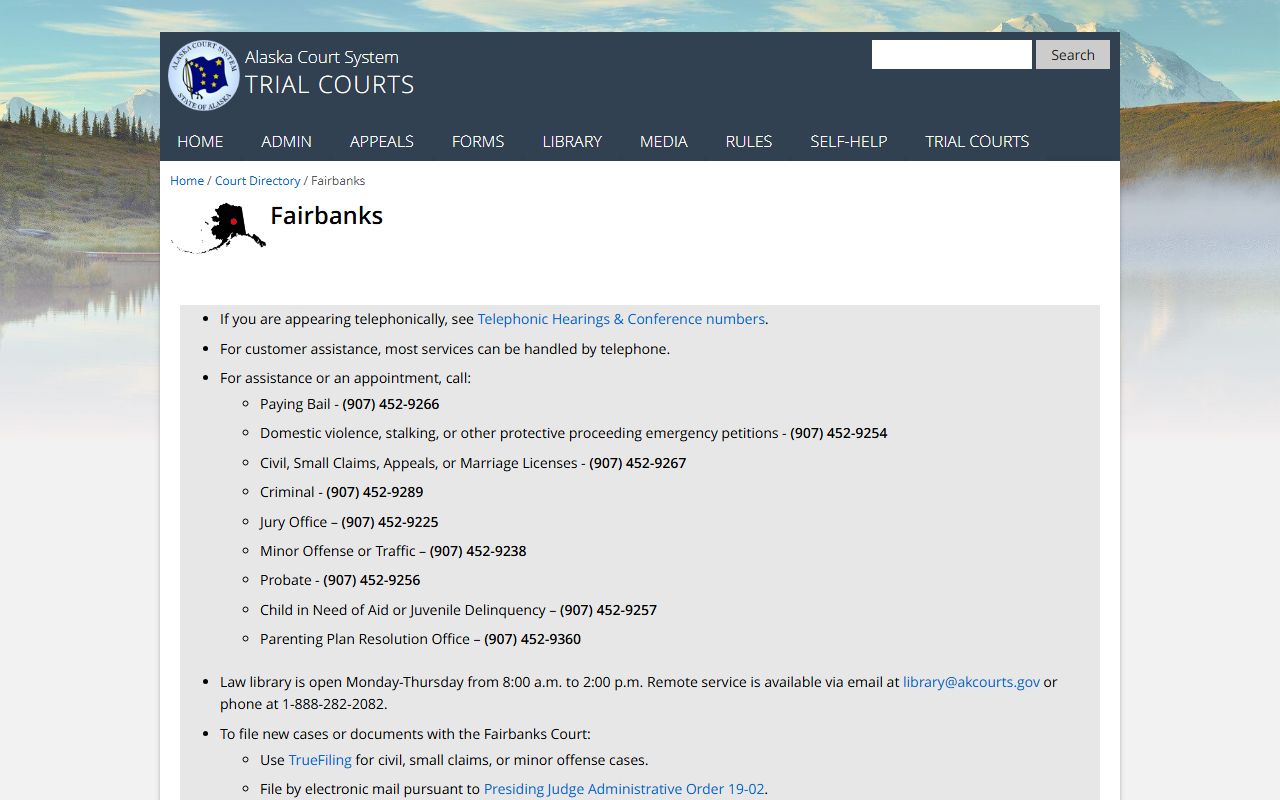
That official directory is the best local anchor because Badger traffic matters route through the same Fairbanks courthouse as the rest of the borough.
How to Search Badger Traffic Court Records
The best Badger search starts with a citation number, a case number, or the full name on the ticket. If you have the 4FA case number, you already have the strongest clue that the file belongs in Fairbanks. If you do not, CourtView can still search by name, and the clerk can often narrow the file with a hearing date or an approximate stop date. A narrow search saves time and lowers the chance of pulling the wrong traffic case.
Once you know the office, the traffic self-help page at courts.alaska.gov/shc/mo/index.htm helps you understand the response path after a citation is issued. The forms page at courts.alaska.gov/forms/index.htm gives you the statewide court forms, while the public records portal at records.courts.alaska.gov shows the case summary that often starts the search. Together, those pages give you the right mix of search, status, and form access without turning the job into guesswork.
When you are ready to search, keep the core details together so the clerk does not have to guess which file you mean:
- Citation number printed on the ticket
- 4FA case number if the file is open
- Full name as shown on the citation
- Approximate date or month of the stop
- Nearby city name if the citation mentions Fairbanks or North Pole
The Wednesday morning closure also matters when you call. If you reach the office during that short window, you may wait longer than expected even though the courthouse is still the right place to ask.
Note: The clerk's office closes Wednesdays from 8:00 AM to 9:00 AM, so a quick call outside that window is the safer move.
Requesting Badger Traffic Court Records Copies
When a portal view is not enough, use TF-311 FBKS for the written record request and TF-304 FBKS if you need audio. The forms page at courts.alaska.gov/forms/index.htm is the official place to start, and the same page family points you toward the correct request path for Fairbanks records. That split matters because a docket copy, a certified copy, and a hearing recording are different records. Asking for the right one up front keeps the request from going in circles.
Online and email requests for Fairbanks usually take four to six weeks. In-person requests with a case number are current, which means the courthouse can often handle them much faster. If staff has to search without a case number, research time can apply. That is why a Badger request should begin with the citation number, the 4FA case number, or at least the full name and hearing date. The better the starting details, the cleaner the request.
TrueFiling at courts.alaska.gov/efiling/truefiling.htm is the filing path if the traffic matter needs a document filed into the court record instead of a copy pulled from the file. That page is useful when a case turns into a motion, a response, or another filing step. For the law behind a citation or procedural rule, the Alaska Legislature statutes page at akleg.gov/basis/statutes.asp is the official text source.
If you need to compare the courthouse record to the broader court structure, the trial courts page at courts.alaska.gov/trialcourts/ keeps the workflow in one place. That is especially helpful when you are deciding between a summary check, a records request, or a filing step.
What Badger Traffic Court Records May Show
Badger Traffic Court Records can show more than whether a ticket was paid. A court file may include the citation number, the 4FA case number, hearing dates, docket notes, payment entries, and the final outcome. That is the kind of detail people need when they are checking a deadline, proving that a citation was resolved, or tracing what happened after a court date. CourtView can confirm the case, but the file is what you want when you need the official history.
Those records can also help separate the ticket from the office that issued it. A stop in Badger, a city police contact, and a court docket may all point at the same event, but each record serves a different purpose. The court file shows the judicial path. The borough page shows local community context. The officer or agency record may show the enforcement side. Once you keep those roles separate, the search becomes much easier.
When you need a hearing result, a payment line, or a copy for your own files, the Fairbanks court record is the one to request first. If you only need to know whether the case exists, CourtView usually gives you enough to start. If the result is thin or the citation is old, the request form and the records email are the better next step.
Badger Traffic Court Records and Borough Context
Badger sits inside Fairbanks North Star Borough, so the borough website at www.fairbanksnorthstarborough.gov is a useful local reference point for place names and community context. It helps explain where Badger fits near Fairbanks and North Pole, but it does not replace the court file. For a traffic record, the key office is still the Fairbanks courthouse at 101 Lacey Street.
If you want the law text behind a citation or traffic rule, the Alaska Legislature statutes page at akleg.gov/basis/statutes.asp is the official place to verify the current wording. That page belongs in the search path when the citation code matters, while CourtView and the court directory belong in the path when the file itself matters. Those are separate steps, and both can be useful on the same case.
Badger Traffic Court Records are easiest to manage when you keep the place search and the record search apart. The borough tells you where Badger sits. The court directory tells you where the file sits. The docket tells you what the court did. When those three pieces line up, the search is much less confusing.
Note: A small CDP like Badger still uses the same district court workflow as the larger Fairbanks area, so the courthouse contact is the most important starting point.